Deck quotes come back further apart than almost any other project, and it confuses people. Three contractors look at the same backyard and hand you three numbers that aren’t close. That usually isn’t because someone is overcharging. It’s because a deck is mostly the part you don’t see, and each of those contractors made different assumptions about it. Working with a deck builder in Connecticut means dealing with footings below frost line, snow load, and ledger attachment details that inspectors look at closely.
Those aren’t upgrades. They’re the structure, and they’re where the money goes before a single deck board is laid. We don’t publish price ranges, because a number pulled off the internet is wrong for your yard specifically and it sets up an argument later. What we can do is tell you exactly which variables move the number, so when you compare quotes you’re comparing the same deck. Here are the five that matter most, roughly in order of impact.

Size, Height, and Framing
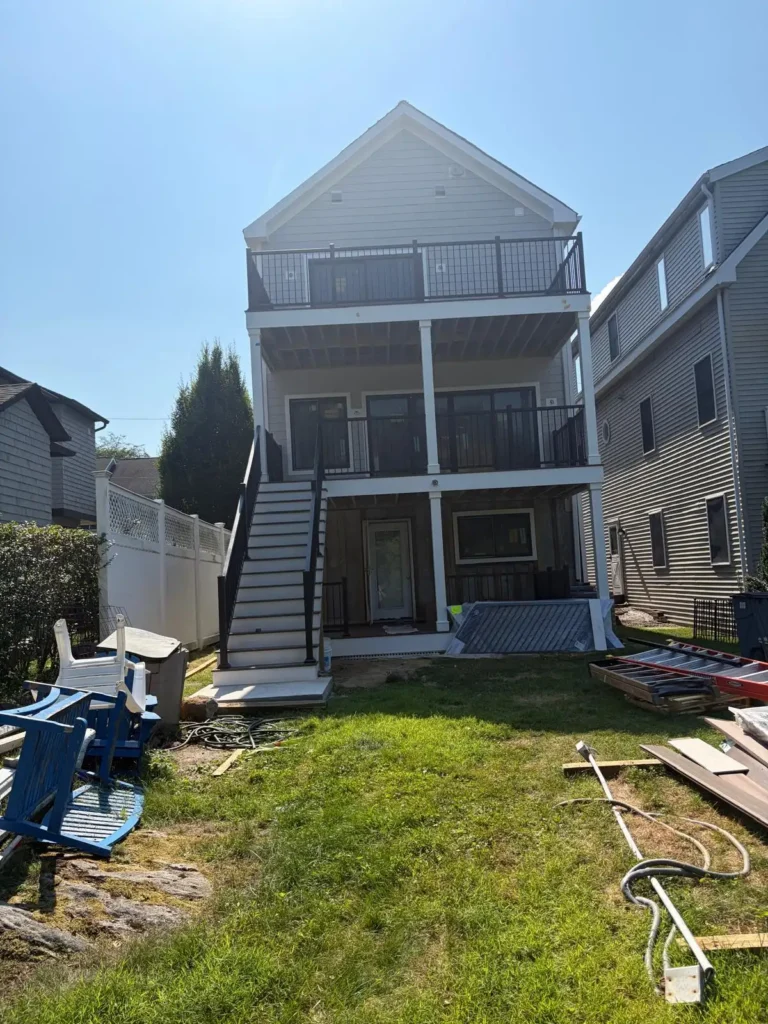
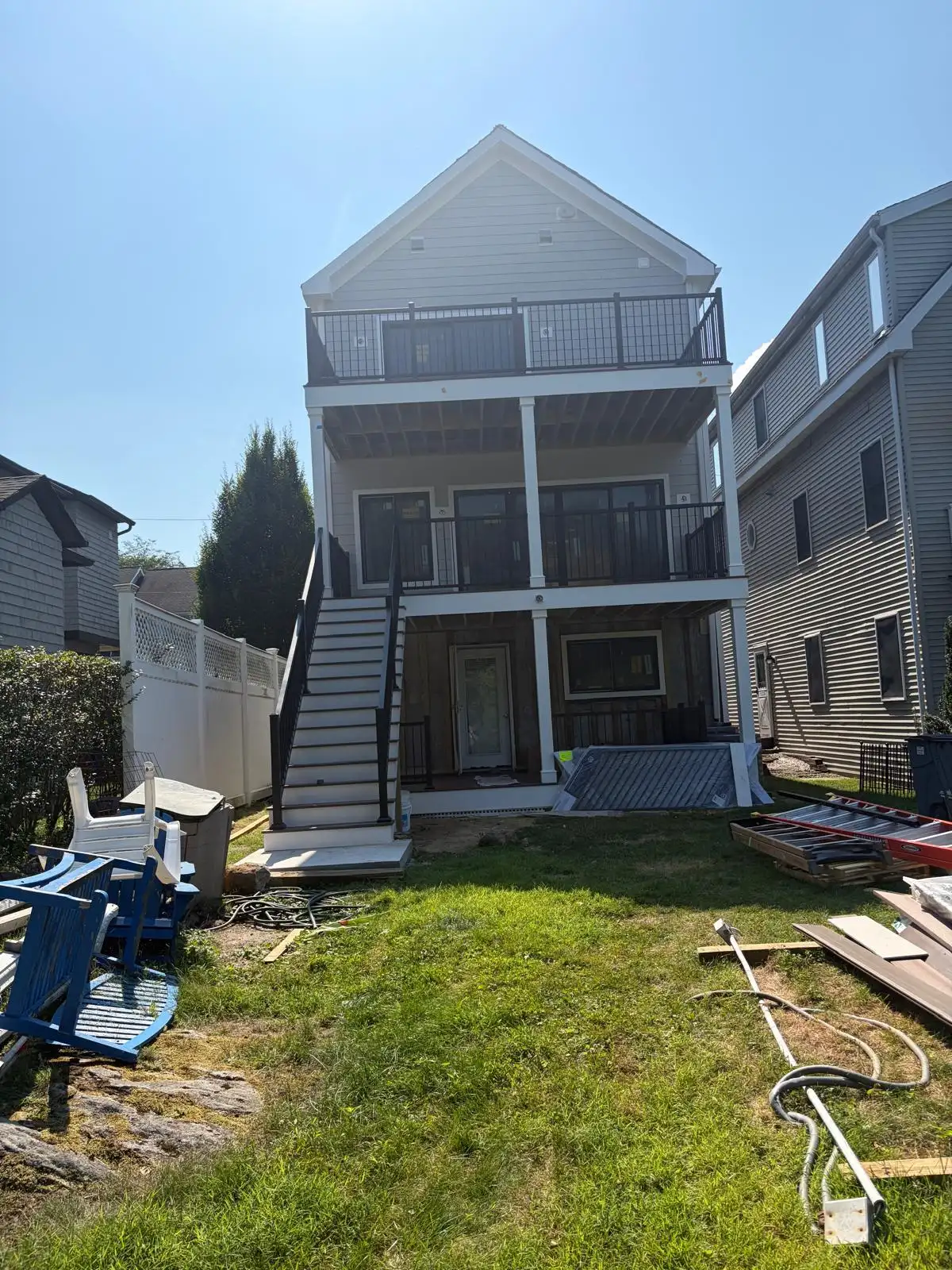
Square footage is the obvious variable, but height matters more than people expect. A deck two feet off the ground is a different structure than one at second-story level, which needs taller posts, more bracing, deeper footings, and often engineered connections. Footings have to go below frost line here, which means real excavation, not surface blocks.
Joist spacing changes with the decking material, and snow load is part of the calculation in Connecticut. Ledger attachment, where the deck ties to the house, is the single most inspected detail on any deck, because failures there are what cause collapses. Flashing that connection correctly protects the framing behind it.
Decking Material
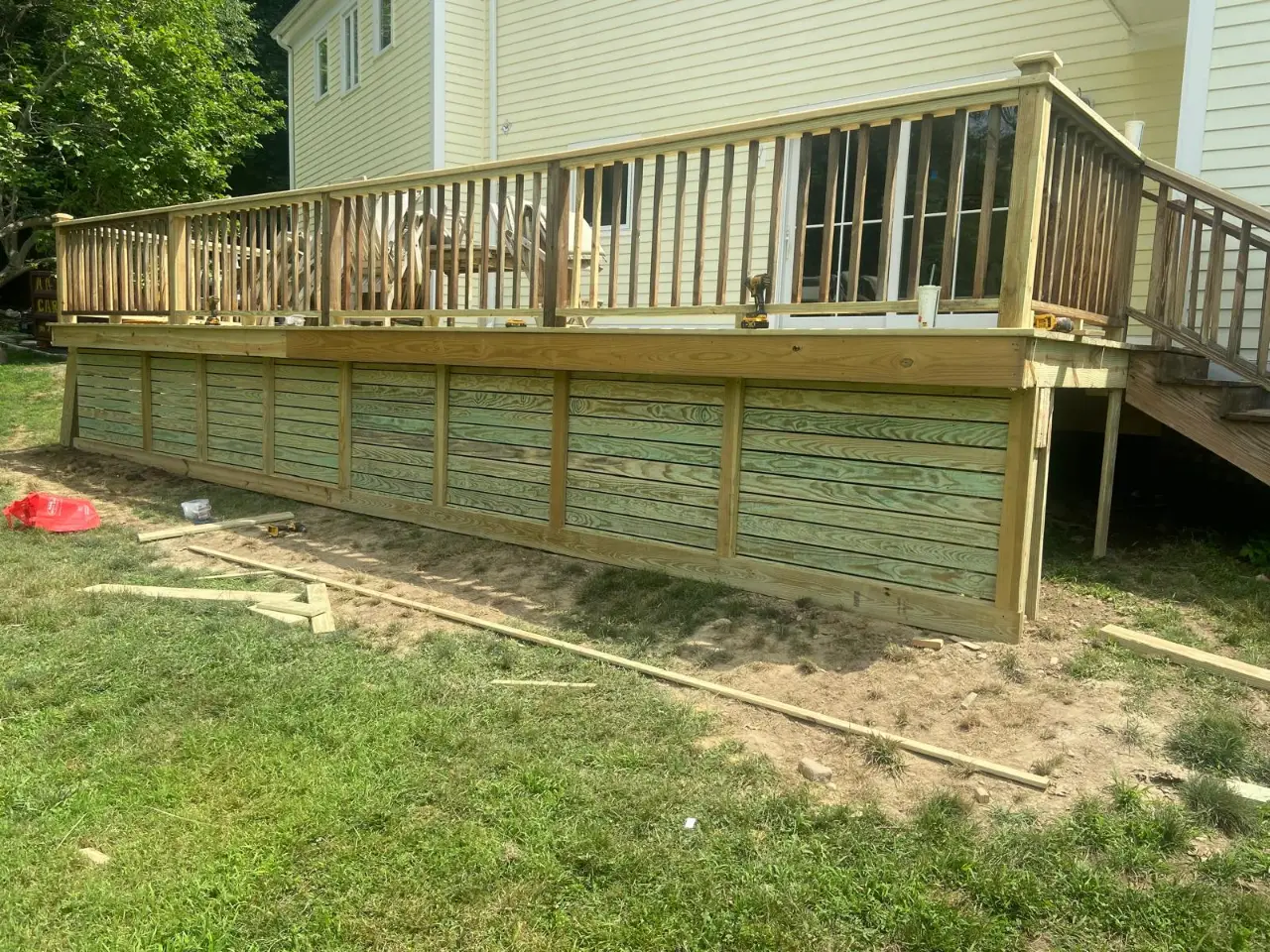
Pressure-treated is the baseline: lowest material cost, needs cleaning and sealing to stay looking good, and it moves as it dries. Cedar costs more, looks better, and wants maintenance. Composite costs the most up front, doesn’t need staining, and holds its appearance, though it does show heat in direct sun. Material choice also affects labor, since some products need hidden fasteners and tighter joist spacing.
Ask which product is quoted, and whether the framing under it is pressure-treated lumber in every case. Some low quotes save money below the surface, where you will never see it until something moves. The decking you walk on is the cheapest part of the decision to change later, and the framing is the most expensive.
Site Conditions
This is the one nobody thinks about and it moves numbers significantly. A flat backyard with truck access is straightforward. A steep lot, common around Candlewood Lake in Brookfield and New Fairfield, means longer posts, more excavation, and hauling everything by hand. Ledge or rock changes footing work entirely.
Tight access between houses means material gets carried, not delivered. Utilities, septic fields, and drainage all affect where footings can go. Two identical decks on two different lots are not the same job, which is a big part of why phone quotes are meaningless. A contractor who has not walked the yard is quoting an average, and averages are wrong in both directions.
Stairs, Railings, and Permits
Stairs are expensive per square foot because they’re all framing and no field. A long run to grade, a landing, or a turn adds real labor. Railings vary enormously in cost, from pressure-treated to cable or aluminum systems, and code requires them above a certain height with specific spacing and load requirements.
Permits and inspections are part of the job for most decks in Connecticut, and they belong in the quote rather than as a surprise. When you compare estimates, check that all three are included in each one. That alone explains a lot of the spread between quotes, and it is the easiest thing to verify before you sign anything.