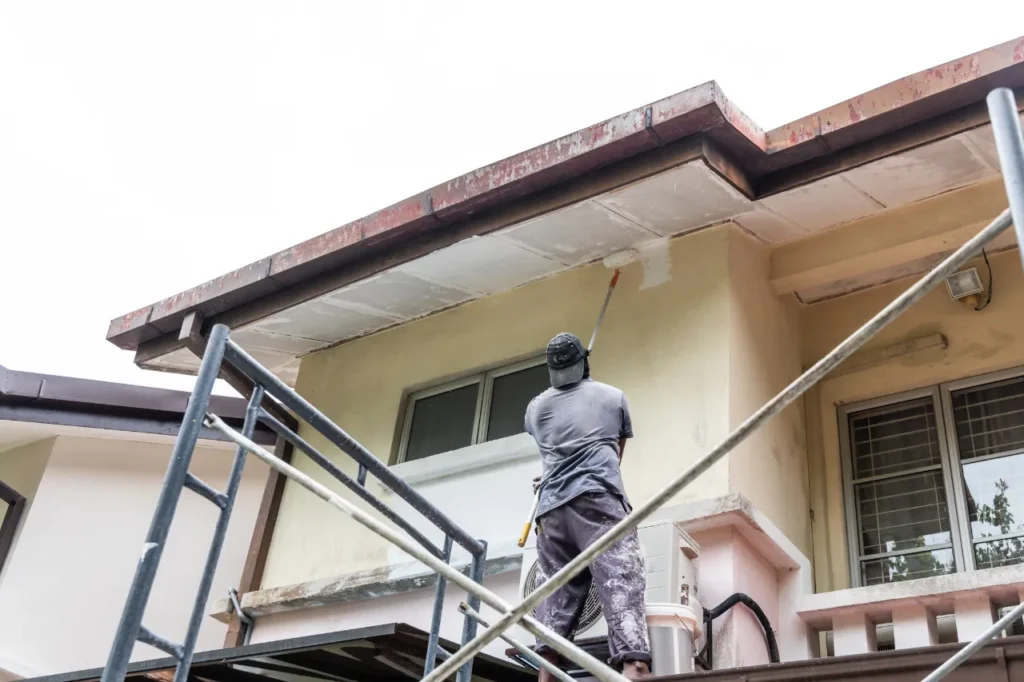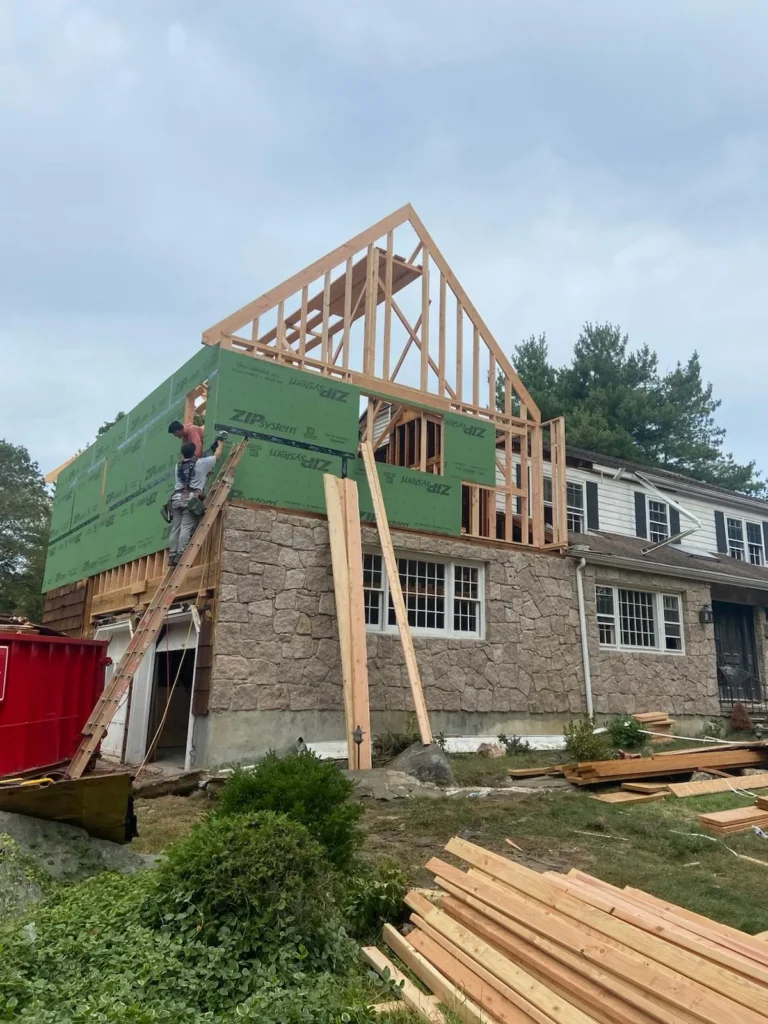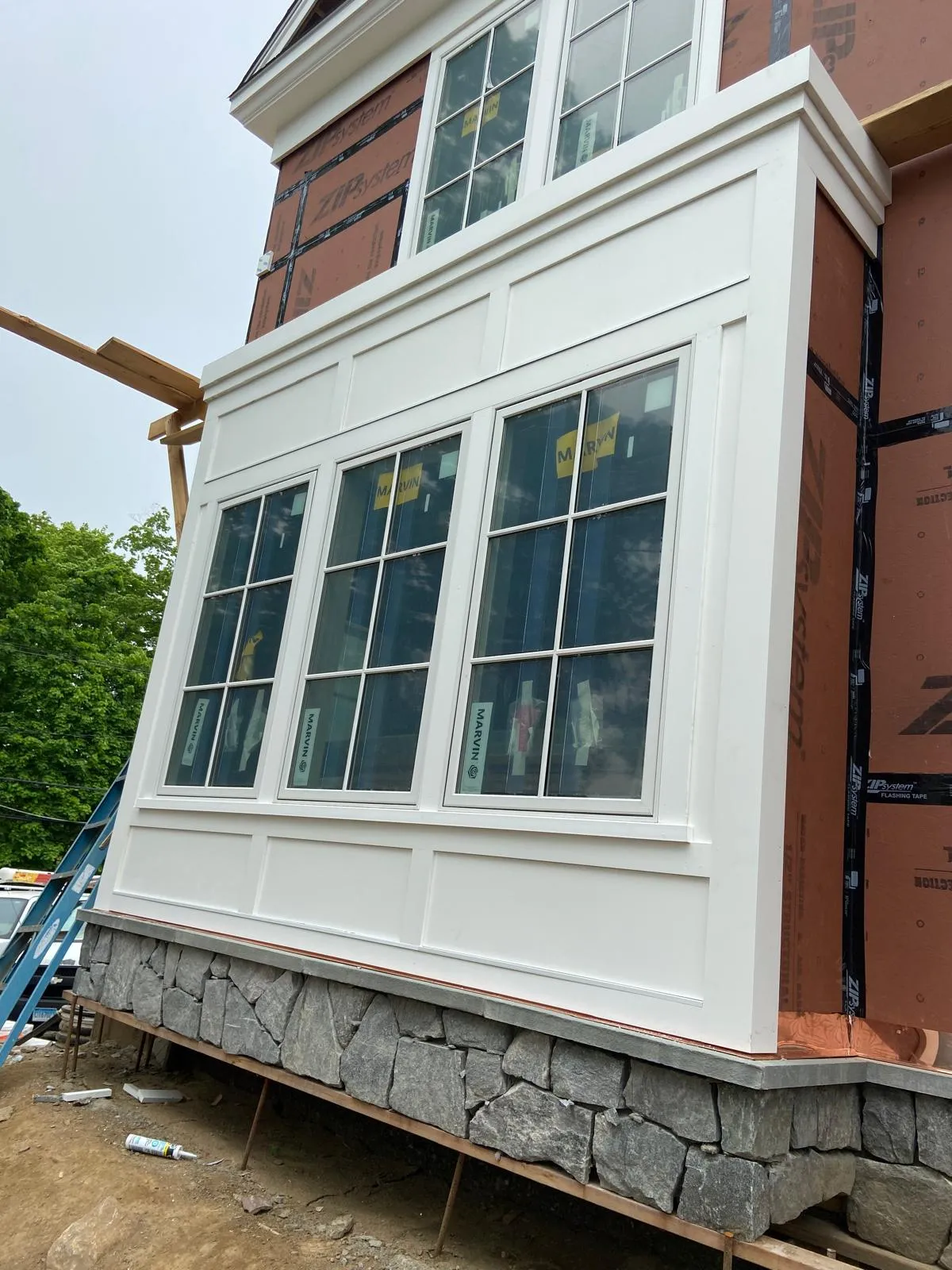
Most homeowners find wood rot by accident. You’re washing windows, or leaning a ladder against the house to clean the gutters, and your hand goes through what looked like solid trim. By then it’s usually been happening for two or three years. Wood rot repair in Connecticut is one of the most common calls we get, and almost none of them start with someone noticing the rot. They start with peeling paint, a stuck window, or a stain on a ceiling inside. The rot is what’s underneath.
Connecticut is hard on exterior wood. We get freeze and thaw cycles all winter, humid summers, and on the coast, salt in the air. Every one of those works on the joints in your trim. Once a joint opens, water gets behind the paint and stays there. Wood that never dries out rots from the back, which is why it looks fine right up until it doesn’t. Here’s how to check your own house, and how to tell the difference between a board that needs replacing and a wall that needs opening up.
Where Rot Starts on a Connecticut House
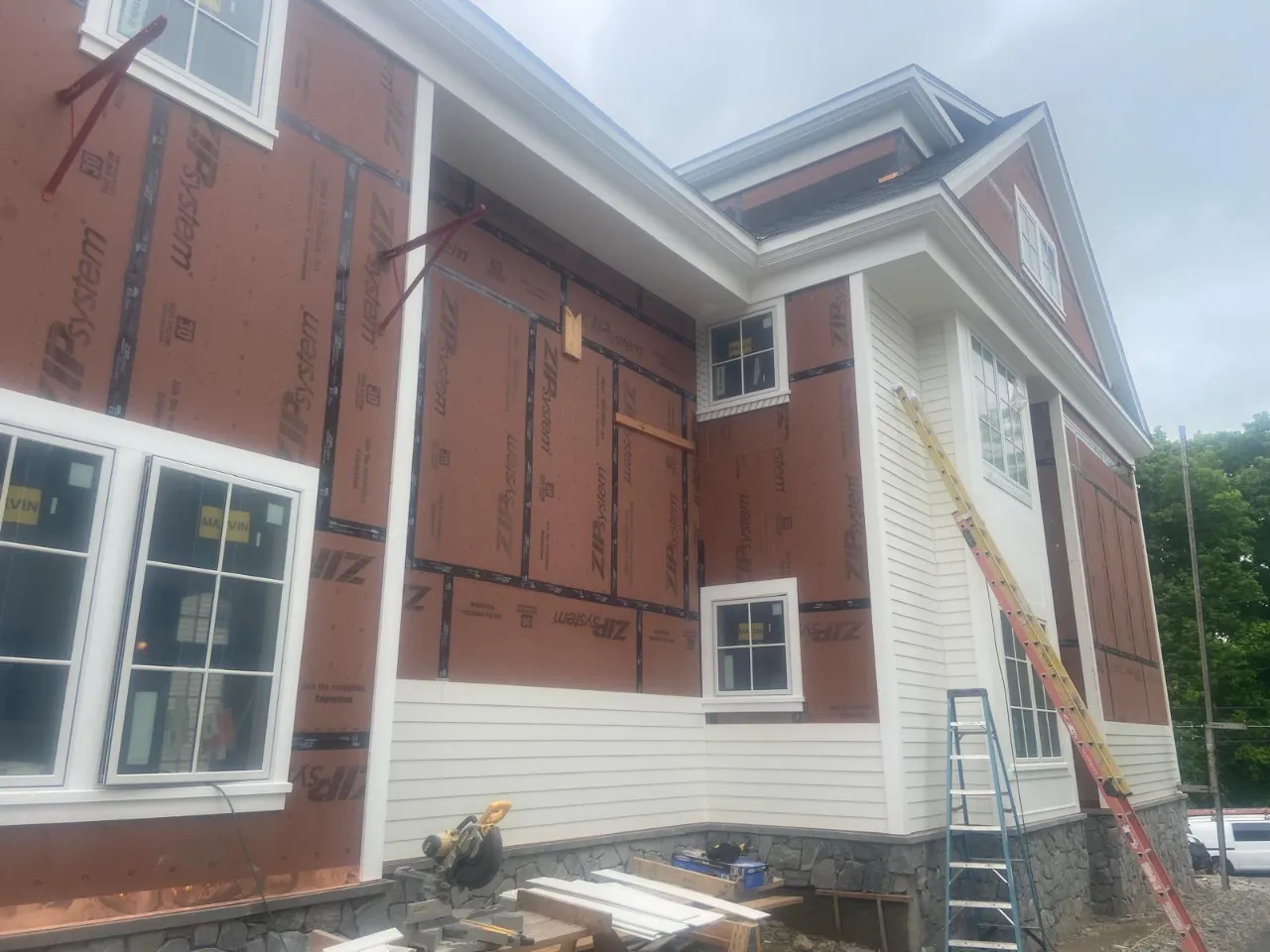
It’s always the same places, and they’re all places where water stops moving. The bottom of corner boards, where the trim meets the foundation or the deck. The ends of fascia runs, especially under a gutter that overflows in heavy rain. Window sills, where the horizontal surface holds water. The base of porch columns, sitting on a wet deck board. Door thresholds. Anywhere end grain faces up, because end grain drinks water like a straw.
Look at those spots first. If your house has a wall that stays shaded most of the day, check that side twice. Wood that doesn’t get sun after it gets wet stays wet, and that’s where mildew and rot show up years before the sunny elevations. Homes near the water in Westport, Norwalk, or Old Greenwich have the added problem of salt, which keeps surfaces damp longer than fresh water does.
The Screwdriver Test
This is the only test that matters, and it takes five minutes. Take a regular flathead screwdriver and press the tip into the wood at the spots listed above. Don’t stab it. Press with steady pressure, the way you’d press a thumb into a ripe avocado. Sound wood resists. You’ll feel it push back, and the tip barely marks the surface. Rotted wood gives.
The screwdriver sinks in, and when you pull it out the wood comes away soft and stringy or crumbles into fibers. If the tip goes in more than about an eighth of an inch with light pressure, that board is done. Paint can hide a lot, but it can’t make soft wood hard. A wall that looks perfect from the driveway can fail the screwdriver test at every corner board. Test, don’t look.
The Rot Isn’t the Problem, the Water Is
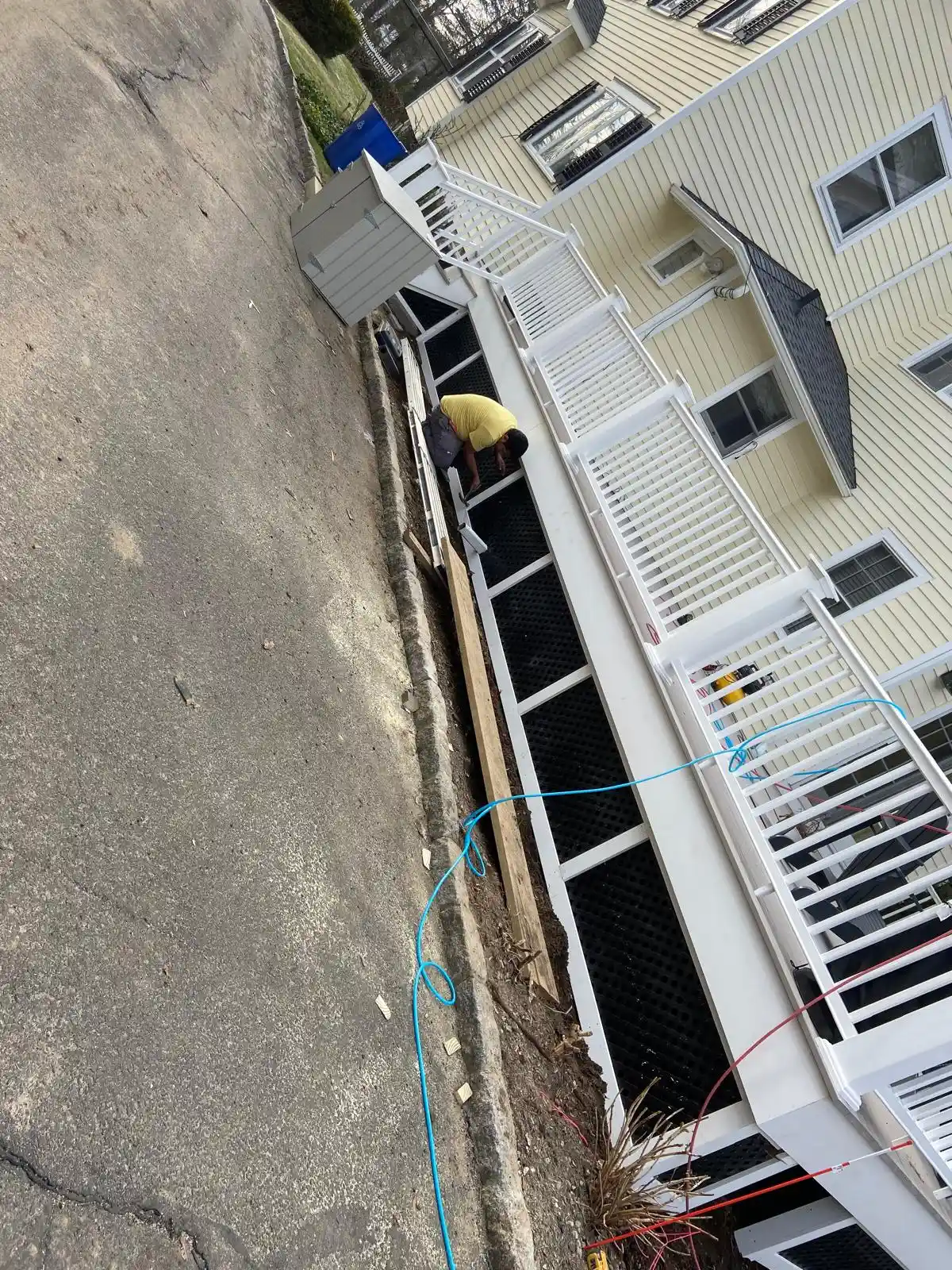
This is where most repairs go wrong. Somebody cuts out the soft board, puts in a new one, primes it, paints it, and two winters later the new board is soft too. That’s because nobody asked where the water was coming from. Rotted trim is a symptom.
The cause is upstream: a gutter that overflows, missing or reversed flashing above a window, a downspout dumping against the wall, siding that was installed without house wrap, a deck ledger that’s holding water against the house. Before any new wood goes in, that source has to be found and corrected. It usually takes ten minutes to figure out during a heavy rain, and it’s the difference between a repair that lasts fifteen years and one that lasts two.
Repair or Replace? How to Tell
If the rot is confined to a board or two and the sheathing behind it is solid, it’s a repair. We cut back to sound wood, correct the water source, and install new material primed on all six sides, including the cut ends. That’s a one-day job on most houses. If the screwdriver goes into the sheathing behind the trim, or the framing under a window feels soft, it’s bigger.
That means water has been getting in long enough to move past the trim, and the wall has to be opened to see how far it went. Waiting is what turns the first case into the second. A trim repair caught early stays a carpentry job. Left two more winters, the same spot becomes sheathing replacement, framing repair, and sometimes drywall on the inside.