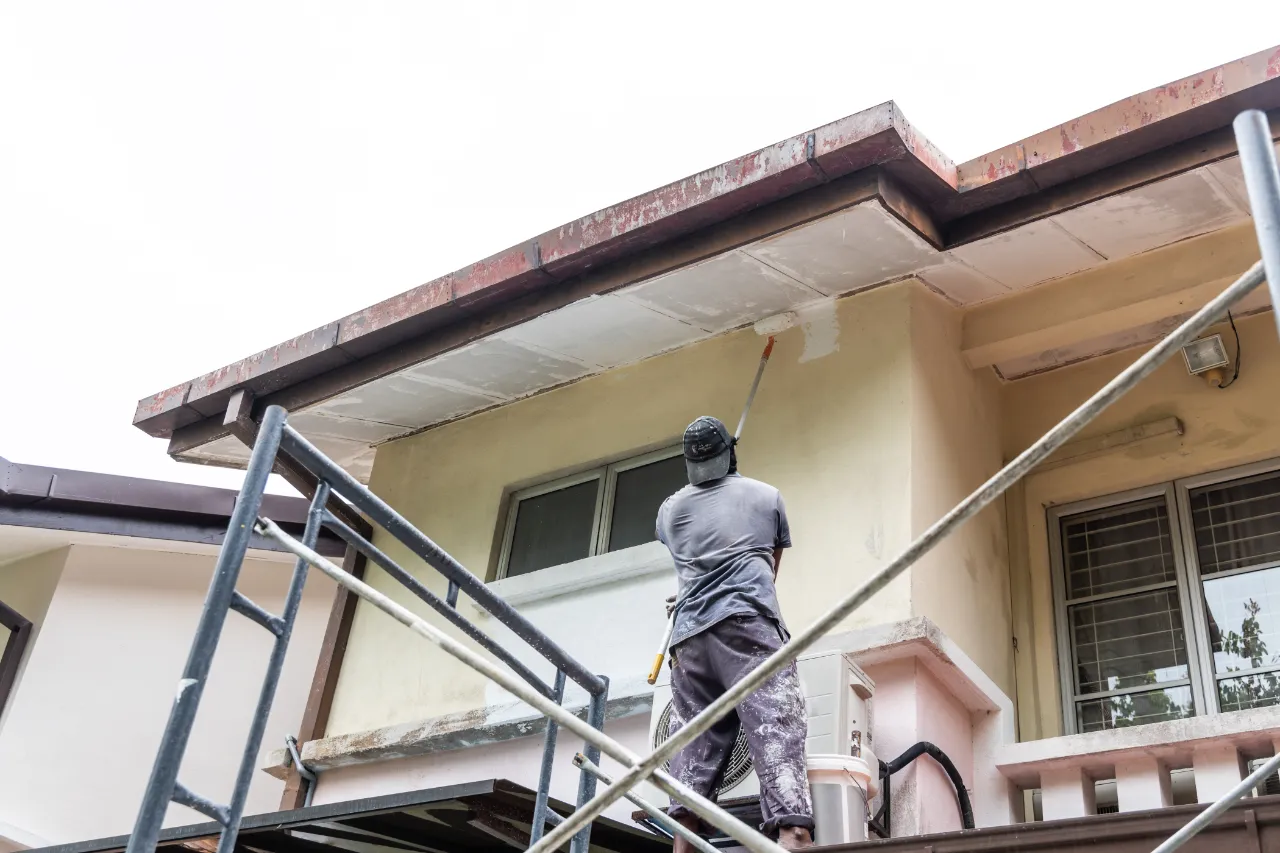
You paint the house. Two years later, one wall looks like it was never touched, while the rest still looks fine. You blame the paint, switch brands, and do it again. Two years after that, the same wall peels in the same place. This is the most common complaint we hear about exterior painting in Connecticut, and it’s almost never the paint’s fault. Paint is a film. It sits on top of a surface and it can only hold as well as whatever is underneath it holds.
When one specific wall fails over and over while the others don’t, something about that wall is different. Usually it’s moisture, and usually the moisture is coming from behind the film rather than landing on the front of it. The good news is that this is diagnosable. There are only about four things that cause repeat peeling, and you can narrow it down by looking at how the paint is failing and where. Here’s what to look for before you buy another five gallons.
What the Peeling Pattern Tells You
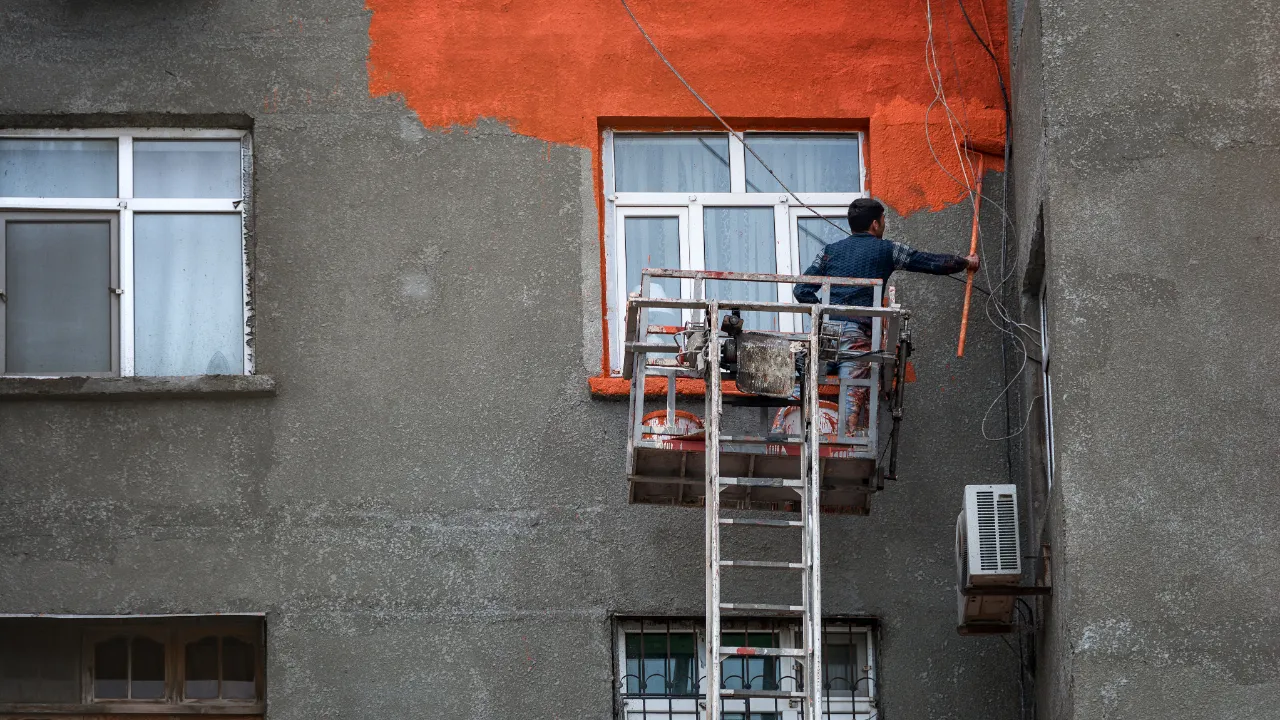
How paint fails tells you why. Paint that comes off in sheets, taking every layer down to bare wood, means moisture pushed it off from behind. Paint that flakes off the top layer only, leaving older paint underneath, means a bonding problem: it went over a glossy or chalky surface that was never sanded or washed.
Blistering with bubbles that appear while the surface is still warm usually means it was painted in direct sun or over damp wood. Cracking in a pattern like alligator skin means too many layers over too many years, with none of them removed. Each of these has a different fix, which is why a painter who only quotes square footage is guessing.
The Wall That Always Fails
There’s usually a reason it’s that wall. North-facing elevations get almost no sun, so they stay damp longer after every rain and grow mildew that breaks the bond. Walls under a gutter that overflows get soaked repeatedly in the same spot. Walls with a bathroom or kitchen behind them can push interior moisture out through the wall if the venting is bad.
Walls near grade that get splashed by roof runoff take water from below. In shaded towns like New Fairfield or Brookfield, where mature trees keep whole elevations from drying out, we see this constantly. Fix the moisture source and the paint stops failing. Skip that step and no product on the market will hold.
Prep Is Most of the Job
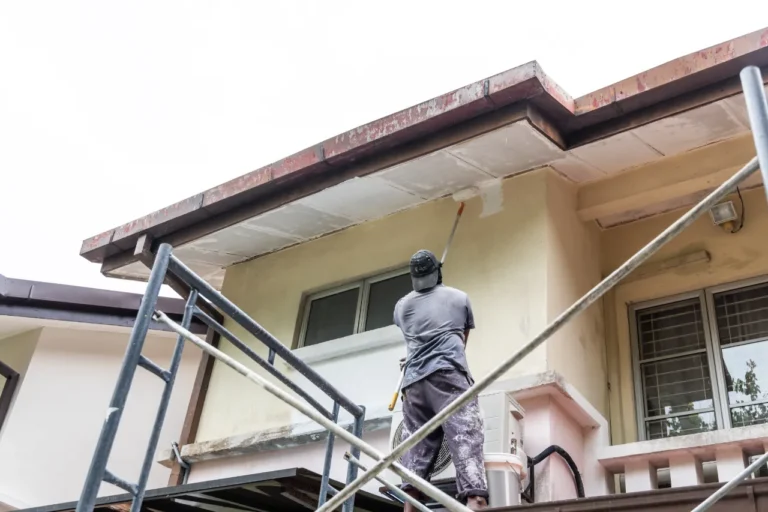
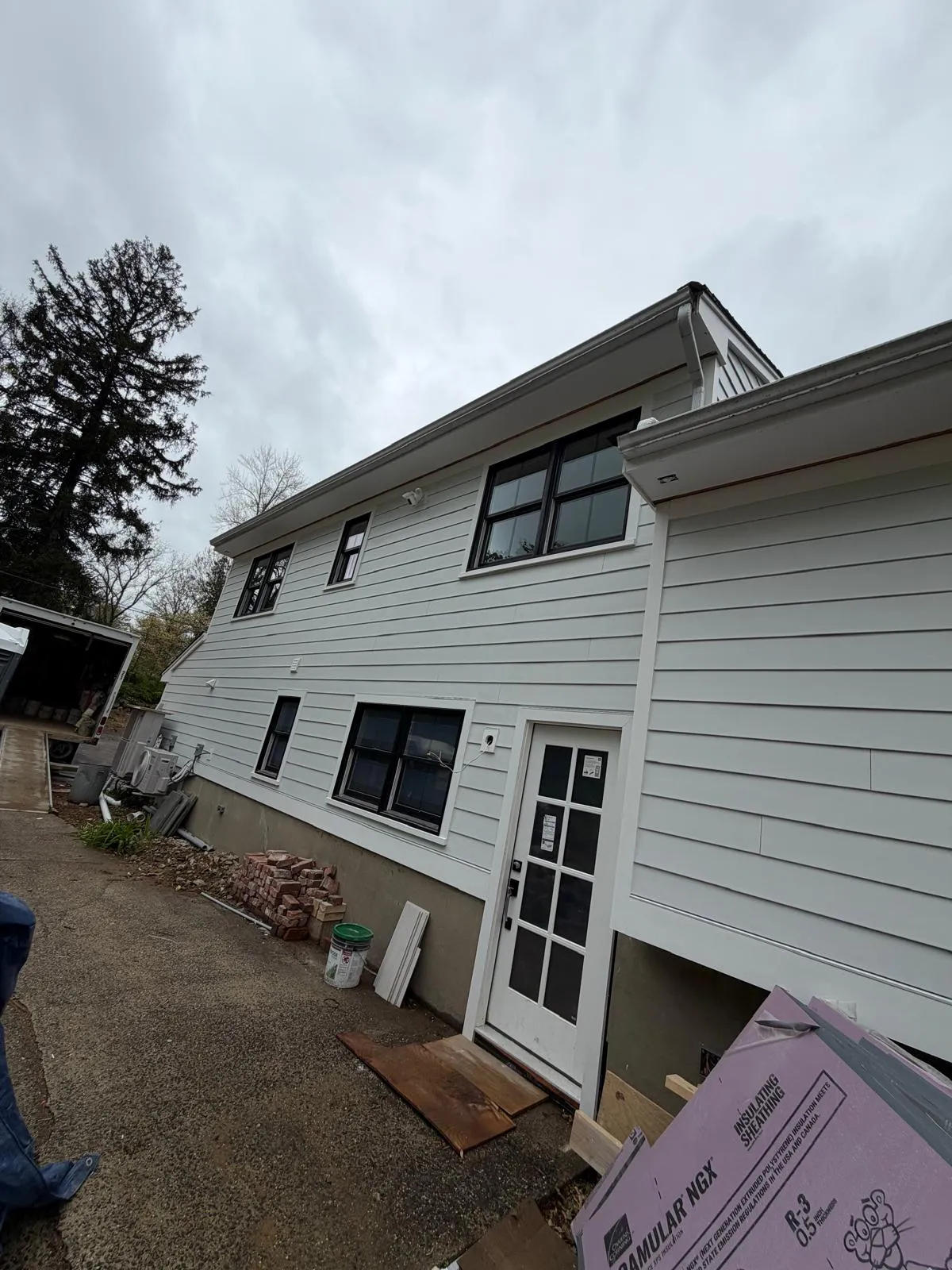
On a repaint, the actual painting is maybe a third of the labor. The rest is scraping loose material back to something sound, feathering the edges so the transition doesn’t telegraph through the finish, sanding gloss, washing off mildew and chalk, priming every bare spot, and cutting out split caulk and replacing it.
That work is invisible in photos and it’s the entire difference between a finish that lasts three years and one that lasts ten. When two quotes for the same house are far apart, this is where the gap is. One includes a week of preparation and the other doesn’t.
Sometimes You Need a Carpenter, Not a Painter
If the wood under the coating is soft, painting it is money spent on one season. Rotted trim, split sills, and soft fascia have to come out first. New material goes in, primed on all sides including the cut ends, and then it gets painted.
Carpentry is our main trade, which is why we catch this during the estimate rather than after the scaffolding is up. A painter who isn’t looking for it will coat right over soft wood, because it takes paint fine. It just doesn’t hold it. If your peeling always happens at the trim rather than the field of the wall, that’s the first thing to check.